The Strangler in the Shadows
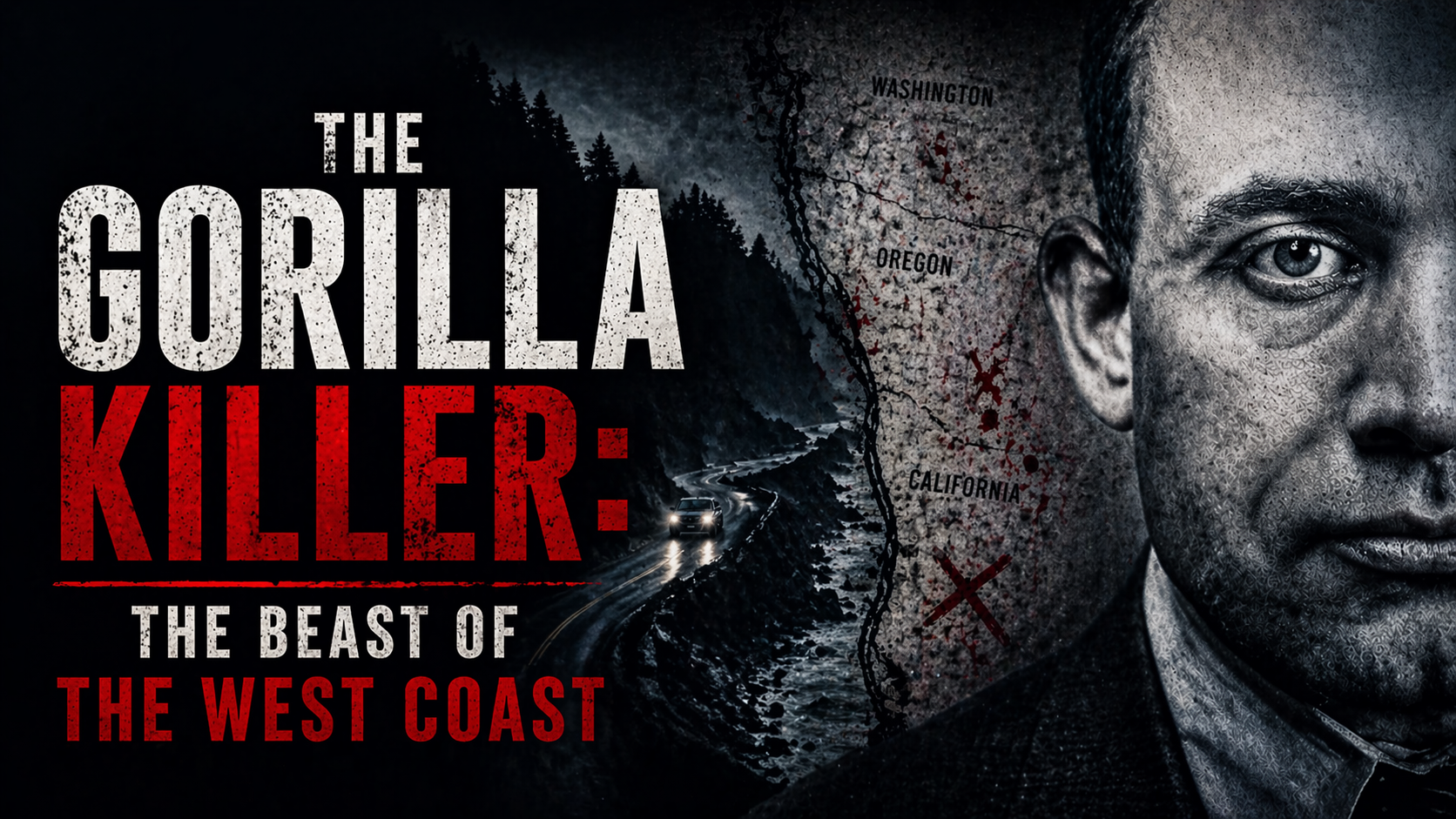
Between 1926 and 1927, a wave of terror swept from the foggy streets of San Francisco to the frozen plains of Winnipeg. The predator, Earle Nelson, earned the terrifying moniker “The Gorilla Killer” due to his immense upper-body strength and his dark, brooding physical presence. Unlike many of his contemporaries, Nelson didn’t rely on weapons; he hunted with his bare hands.
The Hunter of Landladies
Earle Nelson possessed a highly specific and chilling target profile:
- The Prey: He exclusively targeted women who operated boarding houses (landladies). He would respond to “Room for Rent” signs, gaining entry under the guise of a quiet, respectable tenant before striking.
- The Signature: Nelson would strangle his victims with such overwhelming force that he left permanent, brutal imprints on their necks. After the murders, he performed disturbing post-mortem rituals, often hiding bodies in trunks or under furniture before calmly exiting the premises.

The International Escape :
He was a master of the rails, utilizing freight trains to vanish across the US-Canadian border, making him one of the first documented “international” serial killers in North American history.
The Great Manhunt of 1927
The public panic reached its boiling point in Winnipeg, Canada, where Nelson claimed multiple victims in a matter of days.
The End of the Beast: Nelson was executed in January 1928. While officially linked to 22 murders, research suggests the true number of his victims across the West Coast may be much higher.
The Capture: After one of the largest manhunts in Canadian history, he was apprehended not by a high-ranking detective, but by an alert citizen who recognized his features from a newspaper sketch.
The End of the Beast : Nelson was executed in January 1928. While officially linked to 22 murders, research suggests the true number of his victims across the West Coast may be much higher.
- The Religious Ruse: Analysis of the case indicates that Nelson often carried a Bible to appear pious and trustworthy to the landladies he targeted. This calculated manipulation of faith allowed him to bypass their natural defenses.
- The “Jekyll and Hyde” Profile: Doctors of the era were divided on his sanity. While he claimed to hear voices, his methodical planning and ability to evade authorities across two countries suggest a high level of predatory intelligence.
- Wirephoto Technology: This case was a pioneer in forensic communication; it was one of the first times wirephoto tech was used to transmit a suspect’s image across vast distances, proving crucial to his final capture.
Review of expert commentary and what political analysts
Residents in the surrounding area reported heightened activity as police units and forensic teams worked throughout the day, sparking speculation about an impending breakthrough. Many expressed cautious optimism, hoping that the latest findings would bring long-awaited clarity. Others voiced concerns about the broader implications, particularly regarding community safety and the timeline for official updates. Sources close to the inquiry stated that the newly uncovered information could potentially.
1. The Genesis of Evil: A Forgotten Psychiatric Past
Before becoming the “Gorilla Killer,” Earle Nelson was already a ghost within the American judicial and medical systems.
- The Formative Trauma: At age 7, Nelson was struck by a car in San Francisco and remained unconscious for six days. Family members noted a radical personality shift afterward; he became erratic, violent, and suffered from chronic headaches a classic precursor in many serial killer profiles involving frontal lobe damage.
- The “Escapologist”: Nelson was committed multiple times to the Napa State Hospital in California. Archives reveal his uncanny ability to escape; he successfully broke out three times before beginning his cross-country murder spree in 1926.
2. Forensic Focus: Disproportionate Lethality
Autopsies from victims in San Jose and Portland highlighted a terrifying physical anomaly that set Nelson apart from other stranglers:
- The “Iron Grip”: Medical examiners of the 1920s noted that the force applied to the cricoid cartilage (the larynx) was so immense that the bones were not just fractured, but pulverized. This confirms that Nelson possessed “maniacal strength,” likely intensified by his psychotic episodes.
- The Absence of Struggle: In 80% of his cases, victims showed no defensive marks under their fingernails. Nelson was so swift and powerful that he neutralized his targets before they could even register the threat.
3. The Winnipeg Trial: An International Spectacle
Nelson’s 1927 trial was one of the first true media circuses, followed hour-by-hour by global news agencies.
- Courtroom Behavior: Nelson spent his days reading the Bible, ignoring witnesses and the jury. When asked why he committed the murders, he claimed to be “the sword of a higher justice.”
- The Insanity Defense: This was a landmark case for the “Dementia Praecox” (an early term for schizophrenia) defense. It sparked a massive debate in North American law regarding criminal responsibility versus mental illness.
4. The Dark Numbers: Unofficial Victim Counts
While 22 murders are officially attributed to him, research into the “Dark Figures” of his timeline suggests a higher toll:
- The 1923-1925 Gap: There is a string of unsolved disappearances of housemaids and landladies in the Midwest during the years Nelson was at large following his hospital escapes. The “signature” the theft of trivial jewelry and bodies concealed beneath heavy furniture matches his later M.O. perfectly.
🔍 Stef Irish’s Forensic Deep Dive
- The Post-Mortem Ritual: Nelson rarely fled the scene immediately. Evidence from the Winnipeg crime scenes indicates he would stay with the bodies for hours, moving them from room to room in a bizarre religious pantomime, likely driven by his paranoiac delusions.
- The Transient Predator Profile: Nelson utilized “hobo” train tickets and lived in makeshift camps near railyards. This mobility made him “invisible” to local police departments, who lacked a centralized communication system at the time.

Researcher’s Note
This report was independently researched and written by Stef Irish, founder of True US Crime.
This article is the result of several months of in-depth research, combining historical records, verified timelines, and documented sources to ensure accuracy and clarity.
Particular attention has been given to investigative details, behavioral analysis, and the broader context surrounding the events, with the goal of delivering a clear, structured, and reliable account.
All content is developed with a commitment to factual integrity, professional storytelling, and respect for the individuals and cases explored.
This note applies to all investigative reports published on True US Crime, reflecting a consistent standard of research and editorial quality.