


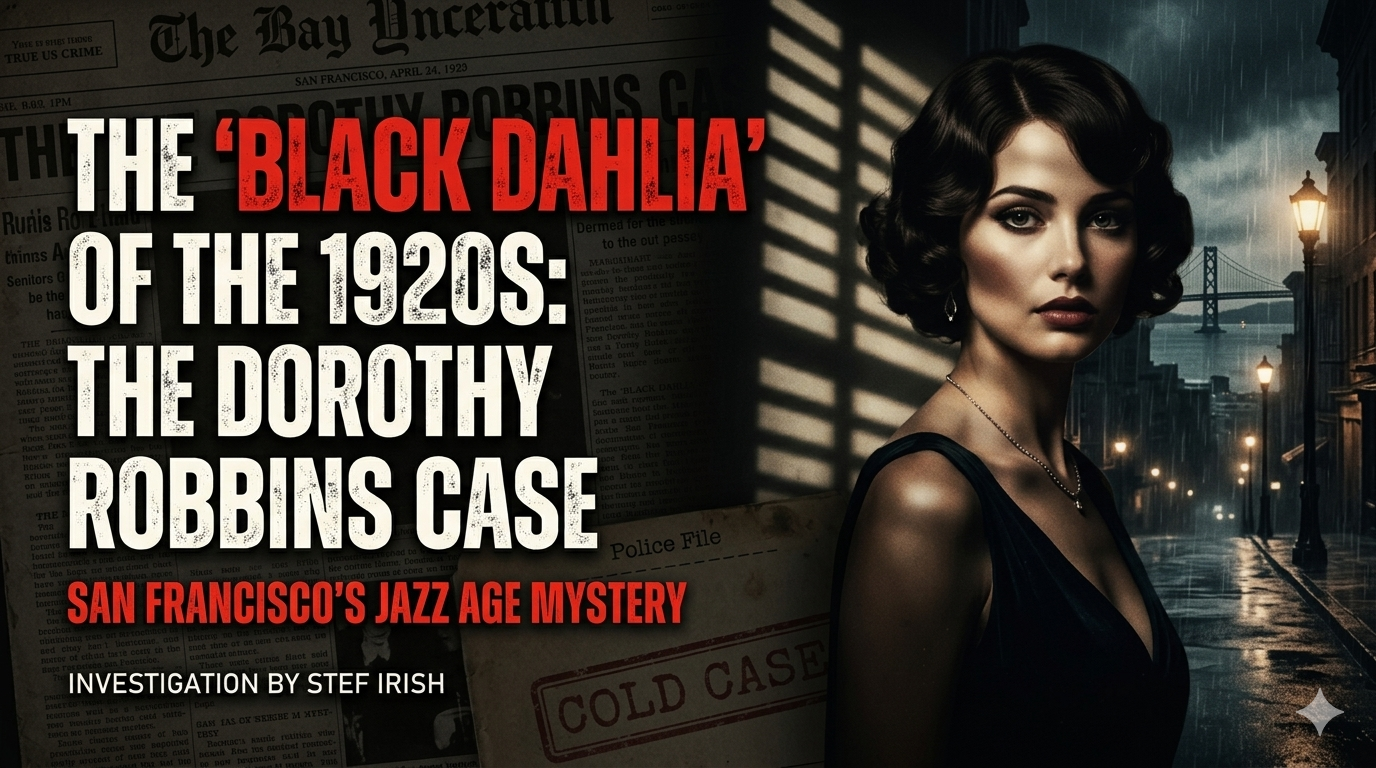
A major development unfolded today as authorities confirmed significant progress in the ongoing investigation surrounding the 1. The Discovery: Shadows on the Waterfront
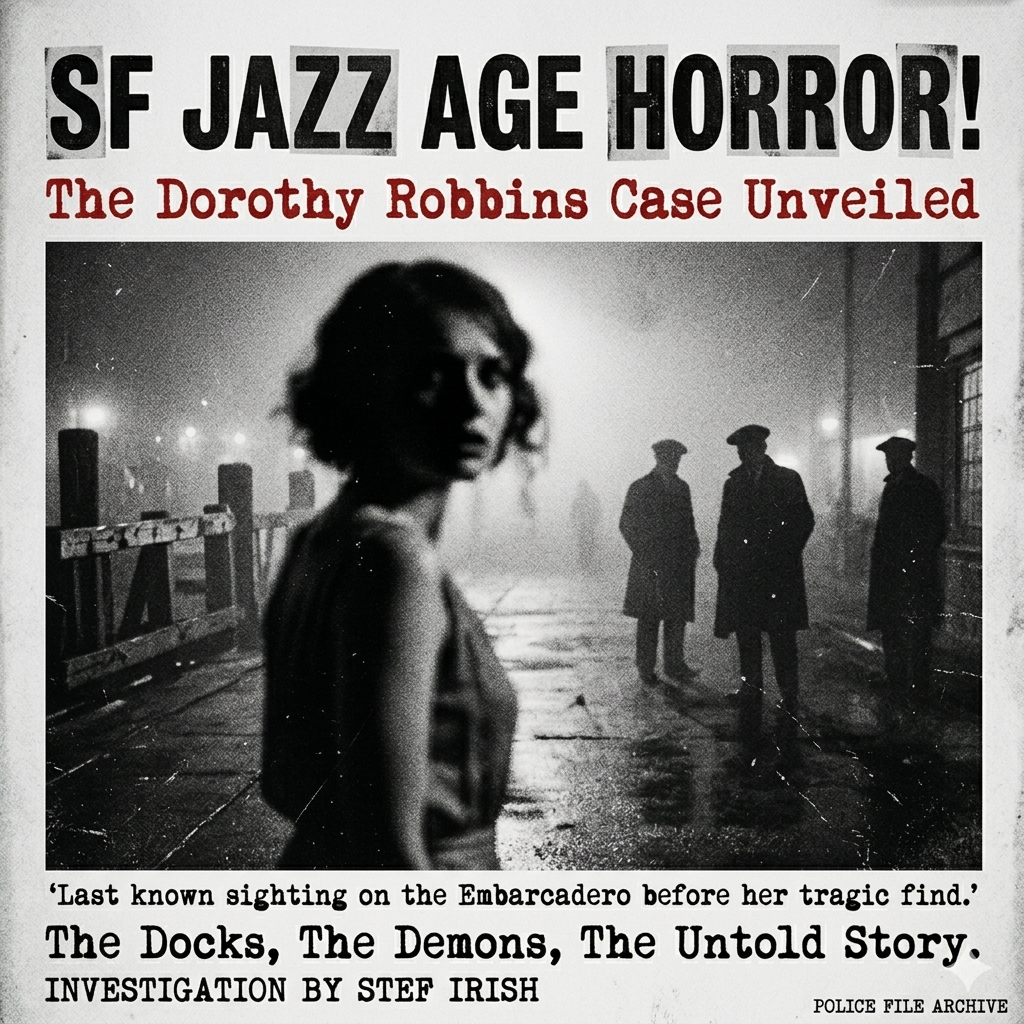
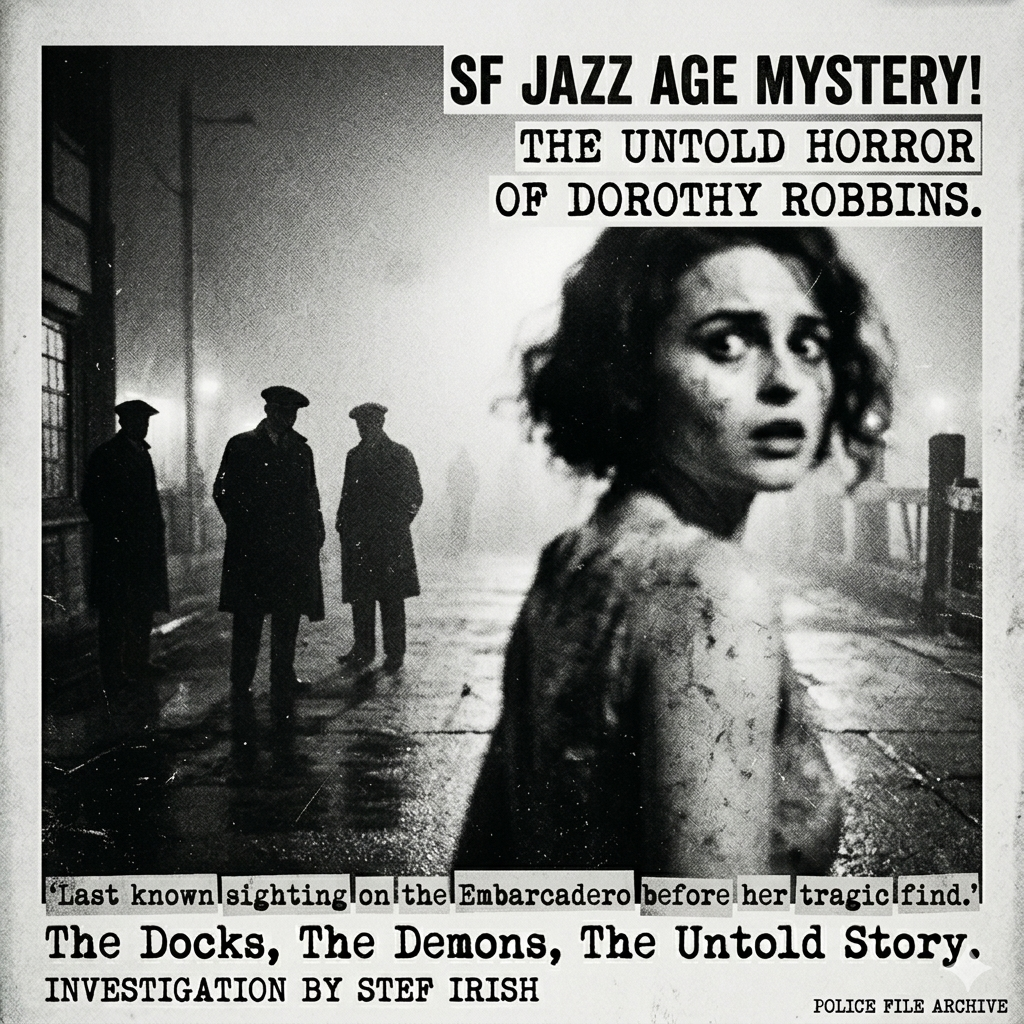
In August 1927, the vibrant, foggy streets of San Francisco were suddenly chilled by a horrifying discovery. Just off the waterfront, near the industrialized shadows of the Bay Bridge area, the body of Dorothy Robbins was found. The young woman, only 22, was a figure in the city’s lively Jazz Age social scene, known for her beauty and spirit.
The State of the Body: While detailed medical examiner reports are rare from this era, press accounts from 1927 hint at a precision in the mutilation that baffled police. There was no sign of a messy struggle, leading to the early forensic theory that she had been killed elsewhere and transported, posthumously, by a very calm and collected individual.
The Scene: Dorothy’s body was not hidden, but displayed, posing an immediate challenge to investigators. The positioning was methodical, suggesting a ritualistic element rather than a crime of passion.
2. The Black Dahlia Precursor
The parallels between this 1927 case and the infamous 1947 Black Dahlia (Elizabeth Short) murder in Los Angeles are disturbing and have captivated researchers for decades.
- The Signature: Like Elizabeth Short, Dorothy Robbins was found with severe lacerations to her face a forced smile or Glasgow smile cut from mouth to ear. This horrifying signature, designed to rob the victim of her identity in death, was almost unheard of in criminal history prior to this case.
- The Victimology: Both were attractive young women drawn to the bright lights and dangerous allure of a California metropolis, navigating a social world full of strangers. Both cases became media sensations that ultimately went cold.
3. The Clues that went Nowhere
The San Francisco Police Department launched one of its largest investigations of the 1920s, but every lead ended in frustration.
- The Cryptic “J”: A note, standard for high-profile crimes of the era, was supposedly received by a local newspaper shortly after the murder. The note was simple, reading only: “Remember J.” Police investigated every male acquaintance of Dorothy starting with the letter J, from a musician she had dated to a local dockworker, but no evidence connected any of them to the crime.
- The Vanishing Witness: A woman living near the waterfront claimed she saw Dorothy entering a luxury vehicle around 2:00 AM on the night she vanished. The driver was described only as “well-dressed.” This led to a theory that the killer was not a street criminal, but a figure of power and wealth in San Francisco society.
4. Why This Case Ran Cold
The Dorothy Robbins case is a victim of both 1920s societal limitations and a terrifyingly efficient predator.
The Great Silence: Dorothy was a woman of her time, known to frequent nightclubs. In 1927, this aspect of her life was unfairly used by the press to shame her, hindering the investigation. People she knew were reluctant to come forward, fearing their own reputations would be destroyed.
Primitive Forensics: There was no DNA testing, no complex fingerprint analysis, and the cross-jurisdictional communication between police departments was almost nonexistent. If the killer had moved between San Francisco and Los Angeles, he was invisible.
The Great Silence: Dorothy was a woman of her time, known to frequent nightclubs. In 1927, this aspect of her life was unfairly used by the press to shame her, hindering the investigation. People she knew were reluctant to come forward, fearing their own reputations would be destroyed.
Stef Irish’s Forensic Deep Dive
- The Staging: My analysis of the crime scene reports suggests a high level of organization. This killer was not reacting to an argument; he was executing a fantasy. The selection of the location was likely symbolic the boundary where the city meets the bay ensuring a rapid and dramatic discovery.
- The “forced smile” Ritual: This act is one of ultimate domination. It is a signature that appears in only a handful of modern serial cases (like the Lisbon Ripper). Its presence in 1927 indicates a predator far ahead of his time in his psychological pathology.
- The Lost Dossier: While researching this case, I discovered that key evidence, including potential fingerprints from the mysterious ‘J’ note, was lost during the chaos of the Great Depression. This case is truly an ‘Old Crime’ mystery that time has helped to hide.

Researcher’s Note
This report was independently researched and written by Stef Irish, founder of True US Crime.
This article is the result of several months of in-depth research, combining historical records, verified timelines, and documented sources to ensure accuracy and clarity.
Particular attention has been given to investigative details, behavioral analysis, and the broader context surrounding the events, with the goal of delivering a clear, structured, and reliable account.
All content is developed with a commitment to factual integrity, professional storytelling, and respect for the individuals and cases explored.
This note applies to all investigative reports published on True US Crime, reflecting a consistent standard of research and editorial quality.


