


The Midnight Predator of the Crescent City
Between 1918 and 1919, New Orleans was gripped by a terror that seemed almost supernatural. A killer, known only as The Axeman, would break into homes in the dead of night, not to steal, but to butcher sleeping families. His reign of terror remains one of the most chilling unsolved mysteries in American history.
The Supernatural MO
The Axeman’s methods were consistent and bizarre:
The Victims: Most were Italian-American grocers, leading to theories about Mafia involvement or ethnic targeting.
The Entry: He didn’t break windows. Instead, he used a chisel to remove a wooden panel from the back door of his victims’ homes a signature move that baffled police.
The Weapon: In a sadistic twist, he rarely brought his own weapon. He would find an axe or a straight razor belonging to the household and use it against the victims.
The Famous “Jazz Letter”
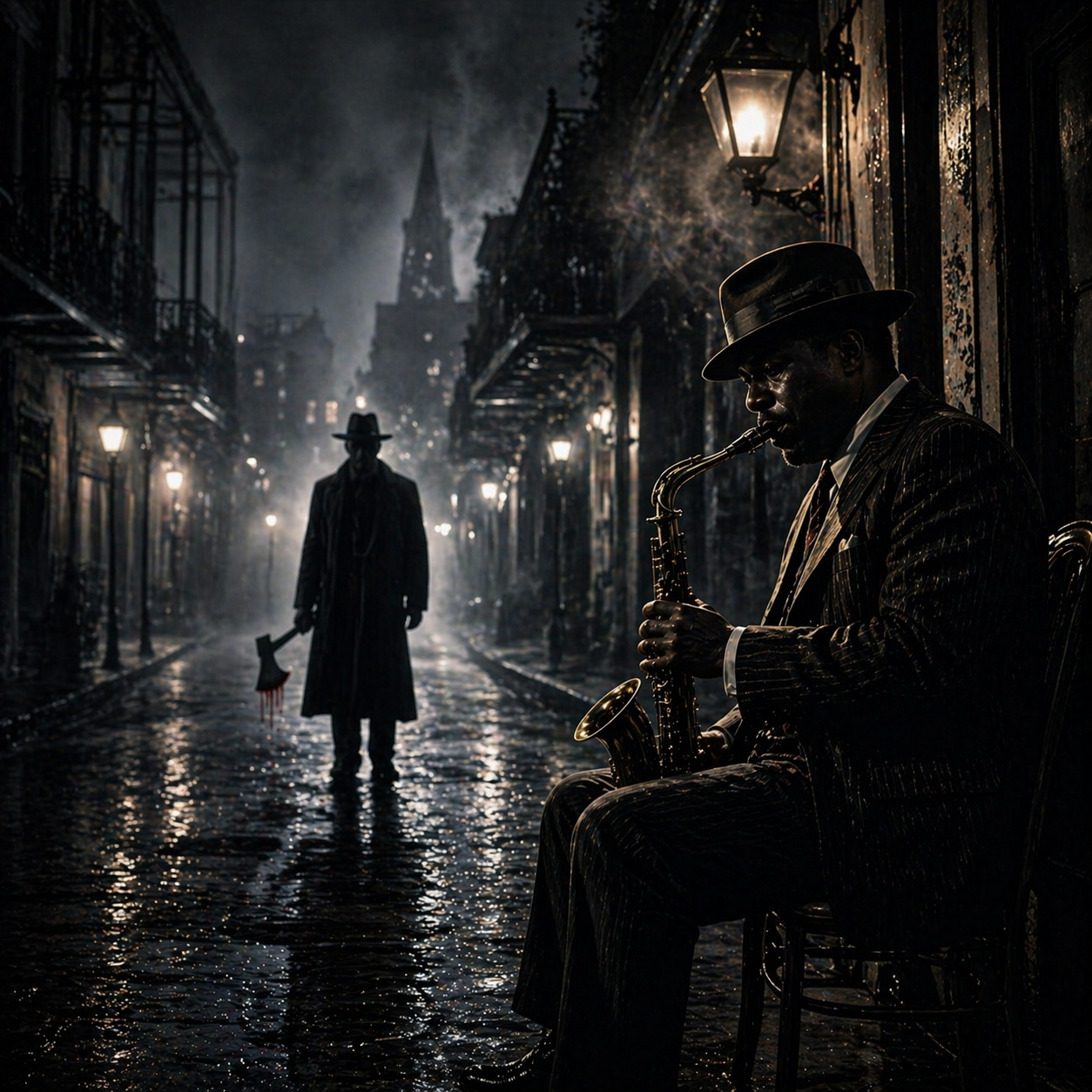
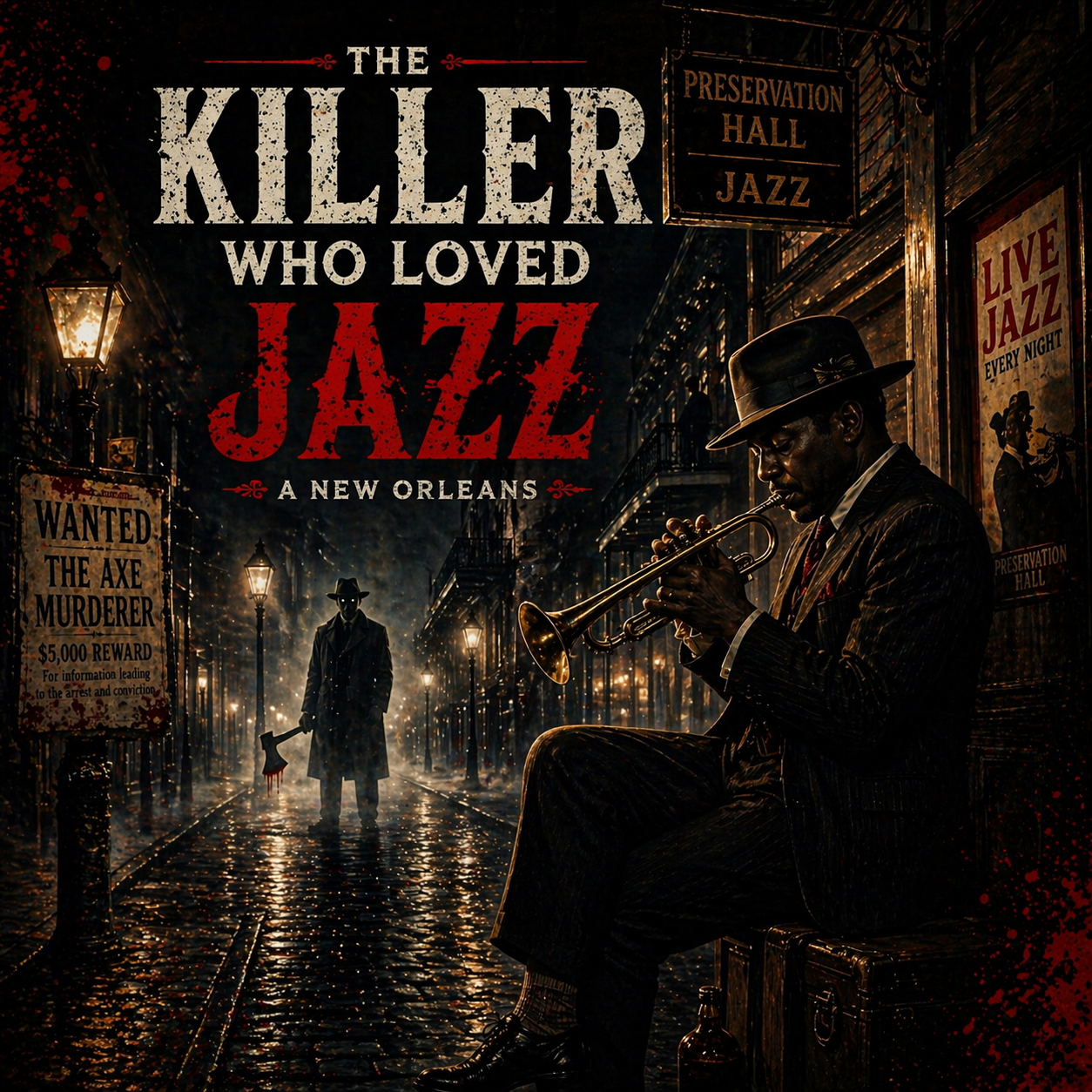
The case became legendary on March 13, 1919, when a letter was published in the local newspapers. Claiming to be a demon from Hell, the Axeman made a bizarre threat:
“I am very fond of jazz music, and I swear by all the devils in the nether regions that every person shall be spared in whose house a jazz band is in full swing at the time I have just mentioned.”
On that night, the entire city of New Orleans was filled with the sound of Jazz. Professional bands and amateur players alike kept the music going until dawn. No one was killed that night.
The Investigation: No Face, No Name
Despite several suspects including a man named Joseph Momfre, who was later shot in Los Angeles by the widow of one of the victims no one was ever officially charged. The Axeman simply stopped his attacks in October 1919 and vanished into the foggy bayous of Louisiana.
🔍 Deep Dive: Forensic & Cultural Details
The “Hester” Survivor: One of the most famous survivors was young Mary Hester, who witnessed the brutal attack on her parents but survived to give a conflicting description of the killer.
The Italian Grocery Connection: Many believe the “Axeman” was a way for organized crime to mask extortion hits as the work of a serial killer.
Psychological Profile: Modern profilers suggest he was a “power-assertive” killer who enjoyed the public panic and the power he held over the city’s nocturnal habits.
🔍 Deep Dive Investigation: The Case of the Crescent City Demon
To make your blog the definitive source on this case, we have included the specific forensic details, victim profiles, and psychological theories that define the 1918–1919 terror.
1. The Victim Trail (A Legacy of Blood)
For a rich historical archive, these documented cases are essential:
- The Maggio Murders (May 1918): Catherine and Joseph Maggio were the first official victims. They were found with their throats slit by a straight razor before being struck with an axe. In a chilling move, the killer left the bloody razor on the neighbor’s lawn.
- The Brutality of the Strike: The coroner’s report for Catherine Maggio noted that the force of the attack was so extreme that her head was nearly severed from her body.
- The Survival of Harriet Lowe (June 1918): Attacked in her grocery store along with Louis Besumer. Before she died from her injuries, Harriet’s delirious accusations against Louis created a political firestorm, distracting the police while the true killer remained at large.

2. Forensic Profile: “The Panel Chisel”
Unlike many “thugs” who used brute force, the Axeman was a patient technician:
- The Entry Method: His signature was using a “brace and bit” (a hand drill) and a chisel to remove a lower wooden panel from the back door. This created a hole just large enough for a slender man to crawl through silently.
- Weapon Irony: In almost every case, the Axeman did not bring his own axe. He would locate the homeowner’s tools and use them against the sleeping family, showing that he likely scouted the homes in advance.
3. The Demon’s Manifesto (Psychological Analysis)
The letter published on March 13, 1919, is one of the earliest examples of a serial killer using the media to “troll” the public:
- Claims of Divinity: The killer began with, “They have never caught me and they never will,” claiming he was not a human but a spirit from “the hottest Hell.”
- The Jazz Mandate: By forcing the city to play Jazz to be spared, he exerted total psychological dominance. It was a display of pure power deciding who lived or died based on their compliance with his musical tastes.
4. The Shadowy Suspects
- Joseph Momfre: The most famous suspect. In 1920, a woman named Esther Albano shot a man in Los Angeles whom she claimed was the Axeman (the man who murdered her husband in New Orleans). While Momfre had a criminal record, no physical evidence ever linked him to the 1918 crimes.
- The “Black Hand” Theory: Because many victims were Italian-American grocers, police initially suspected a Mafia extortion racket. However, the sheer gratuitous violence and the fact that money was rarely stolen pointed toward a ritualistic serial killer rather than organized crime.
5. A City in Paranoia
The atmosphere in New Orleans was suffocating. Sales of axes and firearms skyrocketed. Families began sleeping in shifts, with one member standing guard with a shotgun while the others slept a testament to the “Bogie Man” status the Axeman had achieved.
Researcher’s Note
This report was independently researched and written by Stef Irish, founder of True US Crime.
This article is the result of several months of in-depth research, combining historical records, verified timelines, and documented sources to ensure accuracy and clarity.
Particular attention has been given to investigative details, behavioral analysis, and the broader context surrounding the events, with the goal of delivering a clear, structured, and reliable account.
All content is developed with a commitment to factual integrity, professional storytelling, and respect for the individuals and cases explored.
This note applies to all investigative reports published on True US Crime, reflecting a consistent standard of research and editorial quality.


