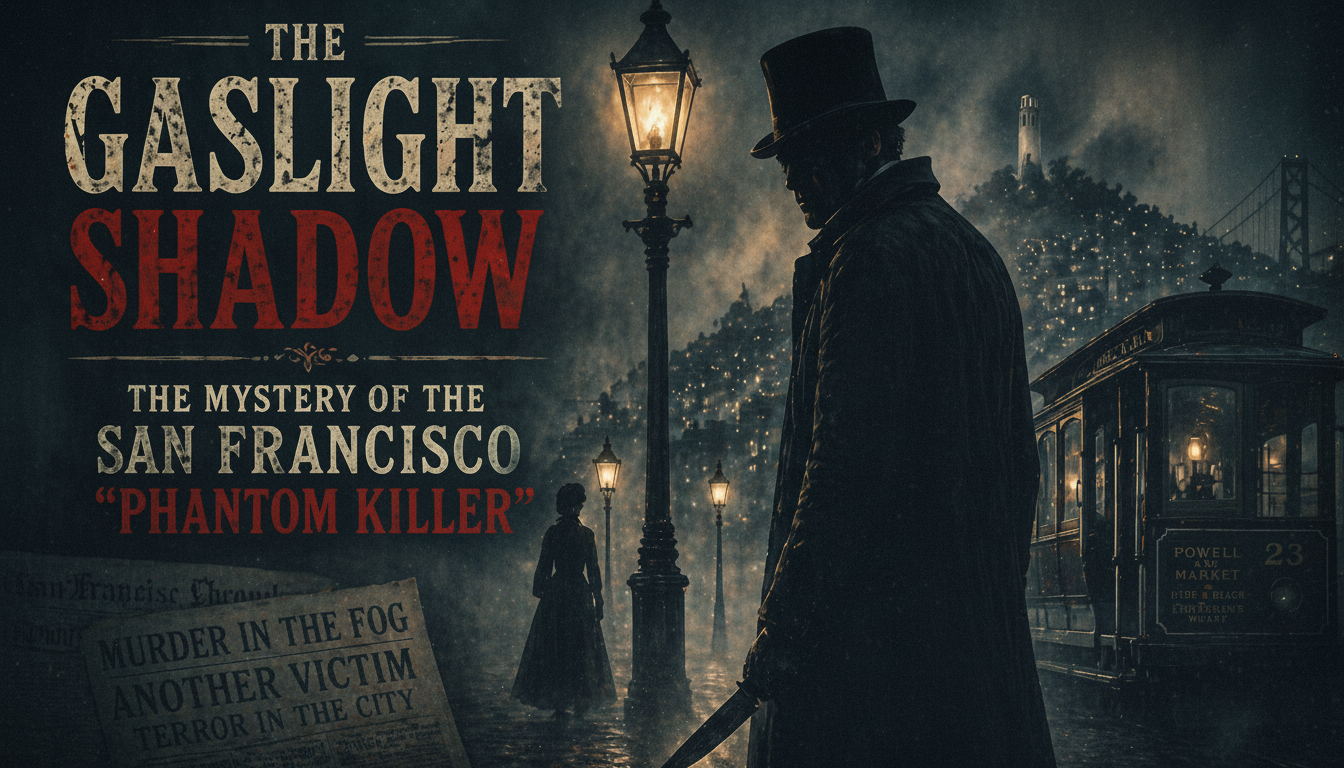
Long before the Zodiac haunted the Bay Area, a different shadow moved through the foggy streets of San Francisco. Between 1904 and 1906, a predator known as the “Phantom Killer” turned the city’s Victorian charm into a landscape of nightmares. He struck with a chilling silence that left the San Francisco Police Department (SFPD) completely baffled.
The “Silent Entry” Modus Operandi
The Phantom Killer was a master of infiltration. His methods suggested someone who knew the architecture of San Francisco’s luxury apartments perfectly:
The Lack of Theft: Like our previous cases, money and jewelry were frequently left on the nightstand. This was not a thief; it was a hunter.
The Invisible Threat: He didn’t break doors. He was known for entering through second-story windows or service entrances that were thought to be inaccessible.
The Signature Strike: His victims were often found in their beds, killed by a single, precise blow to the head or a silent strangulation.


A City on the Edge
The panic reached its peak in 1905. The wealthy residents of Nob Hill and Pacific Heights began hiring private bodyguards. The newspapers of the time, like the San Francisco Call, fueled the fire with headlines about a “Spirit” that could pass through walls.
The investigation was led by Captain John McManus, who ordered his officers to patrol in felt-bottomed shoes to match the killer’s silence. Despite hundreds of “suspicious characters” being detained, the killer always seemed to be one step ahead of the gaslight patrols.
The Great Quake: Did Nature Stop the Monster?
One of the most fascinating theories about this case involves the Great San Francisco Earthquake of 1906. After the fires and the destruction of the city, the murders stopped abruptly.
The Escape: Or did the chaos of the city’s destruction provide the perfect cover for him to slip away to a new territory, never to be identified?
Deep Dive: Archive Details
The Ghostly Footprints: In one crime scene, police found footprints that led to a wall and simply… vanished, leading to local legends about a supernatural entity.
The “Nobby” Suspect: One of the lead theories involved a disgraced local doctor who disappeared the day of the 1906 earthquake.
Psychological Profile: Modern analysts believe the killer was a “Lust Murderer” who derived power from invading the most private spaces of the city’s elite.

Deep Dive Investigation: The Cat Burglar of the Fog
To ensure your blog provides the most comprehensive archive of this era, we have detailed the specific forensic challenges, the victims of the elite districts, and the tactical innovations used by the SFPD to stop the “Phantom.”

1. Chronology of the Shadow (The Foggy Deaths)
While many official records were incinerated in the 1906 fires, these specific cases remain preserved in the newspaper archives of the time:
- The Nob Hill Intrusion (January 1905): A prominent heiress was found strangled in her bedroom, which was locked from the inside. There were no signs of forced entry, except for a second-story window left slightly ajar at a height deemed “impossible” to reach without a ladder.
- The Pacific Heights Slaying: A businessman was killed by a single, crushing blow to the temple with a heavy, flat object. The killer took the time to ceremoniously pose the body with hands crossed over the chest, yet left a gold watch and a full wallet untouched on the nightstand.
- The “Shadow Vicar” Sightings: Multiple witnesses claimed to have seen a tall, slender silhouette wearing a long black duster and a silk top hat vanishing into the bay fog seconds after screams were heard in the alleyways.
2. Forensic Profile: “The Acrobat Killer”
The Phantom was not a brute-force attacker like the Axeman; he was a master of silent movement and climbing:
- Extreme Agility: The San Francisco Police Department (SFPD) suspected a former sailor or a high-rise construction worker. The killer utilized narrow ledges and Victorian drainpipes to enter mansions through the upper floors.
- Master of Silence: Victims were often killed while other family members slept in the very next room. The killer’s ability to navigate creaky Victorian floorboards without a sound fueled local legends that the murderer was a “ghost.”
3. The “Felt-Sole” Patrols (Police Innovation)
Faced with a killer who could hear boots on cobblestones from a block away, Captain John McManus implemented a unique tactical shift:
- Muffled Footsteps: Patrol officers were ordered to glue thick layers of felt to the soles of their boots. This allowed them to move silently through the streets to surprise the “Phantom” during his scouting phases.
- Undercover Servants: Detectives were planted as butlers or valets in the high-society homes of Nob Hill to act as “live bait” and trap the intruder in the act.
4. The 1906 Erasure: A Natural Executioner?
The Great San Francisco Earthquake of April 18, 1906, didn’t just destroy the city it seemingly executed the crime:
- The Death Theory: Many historians believe the killer resided in the South of Market district, which was completely leveled by the resulting fires. It is highly probable the “Phantom” perished in the rubble, taking his identity to the grave.
- The Lost Files: The destruction of the SFPD Central Archives in the fire prevented any future fingerprint comparisons or physical evidence from being matched to criminals caught in other states years later.
5. Psychological Profile: The Predatory Voyeur
Unlike killers motivated by profit, the San Francisco Phantom was driven by the invasion of privacy. By striking in the most secure, elite bedrooms of the city, he was demonstrating total superiority over the police and the social establishment.
Researcher’s Note
This report was independently researched and written by Stef Irish, founder of True US Crime.
This article is the result of several months of in-depth research, combining historical records, verified timelines, and documented sources to ensure accuracy and clarity.
Particular attention has been given to investigative details, behavioral analysis, and the broader context surrounding the events, with the goal of delivering a clear, structured, and reliable account.
All content is developed with a commitment to factual integrity, professional storytelling, and respect for the individuals and cases explored.
This note applies to all investigative reports published on True US Crime, reflecting a consistent standard of research and editorial quality.