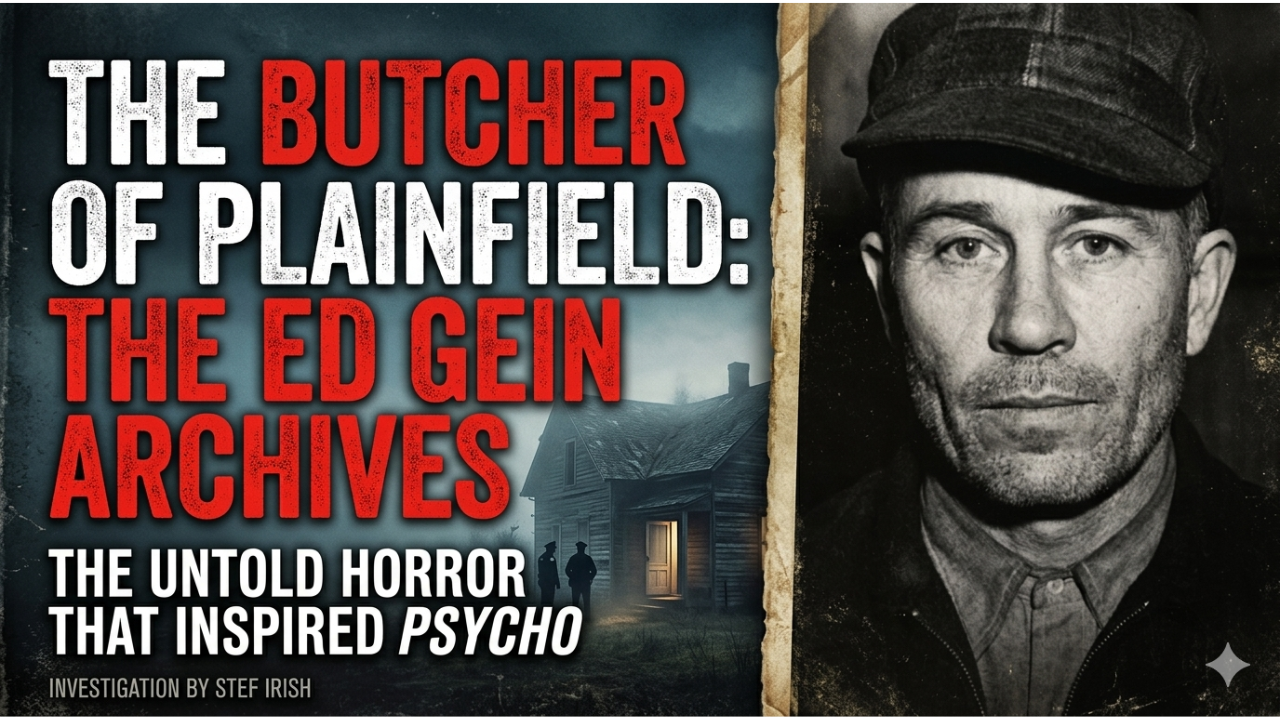
A major development unfolded today as authorities confirmed significant progress in the ongoing investigation surrounding the 1. The Quiet Neighbor of Plainfield
In November 1957, the small town of Plainfield, Wisconsin, was rocked by the disappearance of a local hardware store owner, Bernice Worden. The investigation led police to the remote farmhouse of a quiet, eccentric bachelor named Ed Gein.
The “House of Curiosities”: Inside the main house, investigators discovered something far more disturbing than a simple murder. Gein had spent years exhuming bodies from local graveyards to create “trophies” and household items from human remains.
The Discovery: When deputies entered Gein’s dark, unheated house, they found Bernice Worden’s body in the woodshed, suspended from the rafters like a deer.
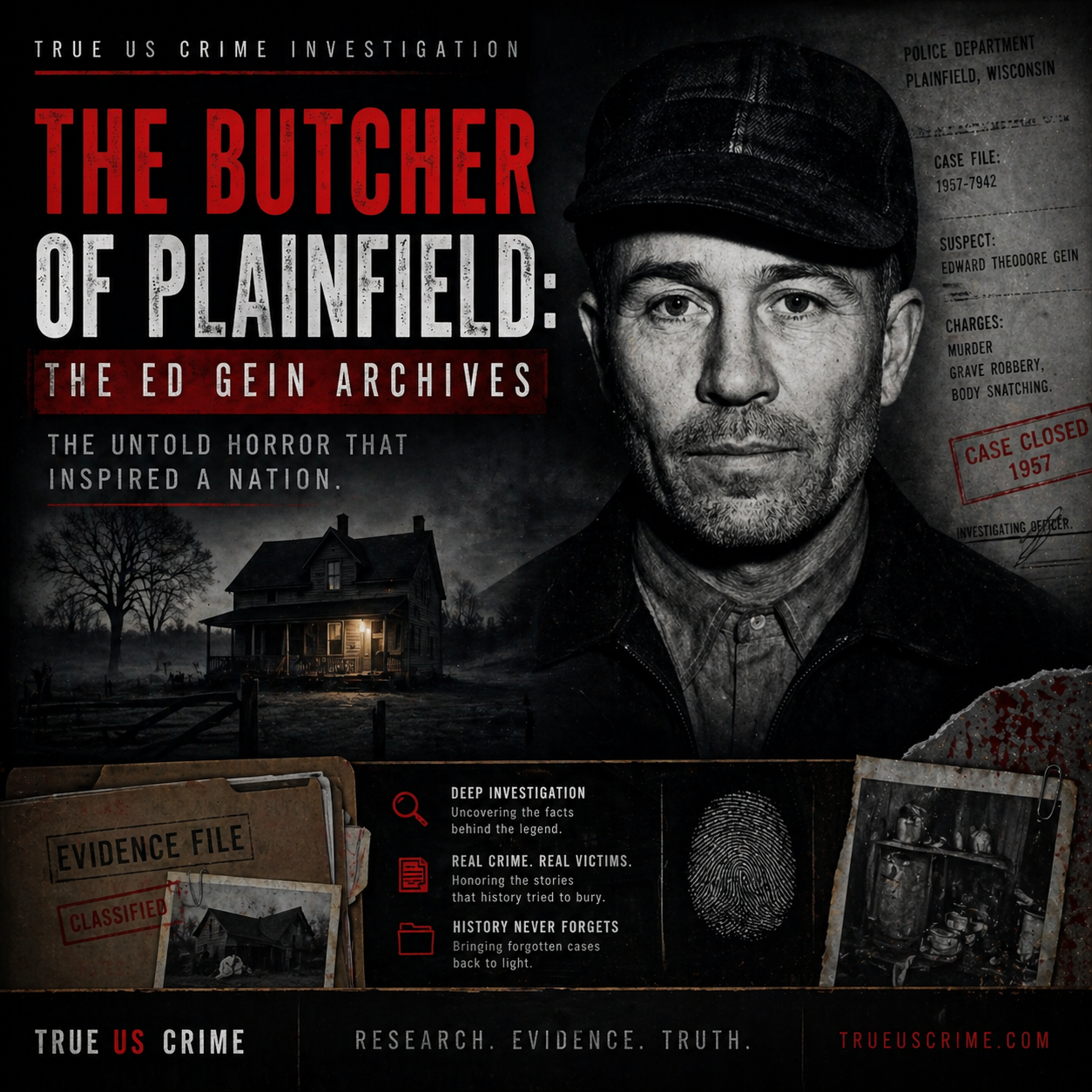

2. Forensic Focus: The Psychology of the Macabre
As a researcher, I find the forensic details of the Gein household to be among the most disturbing in American history. It wasn’t just violence; it was an obsession with “preservation”:
- The “Mother” Complex: Following the death of his overbearing mother, Augusta, Gein sealed off her bedroom and kept it in pristine condition, while the rest of the house rotted. His crimes were a twisted attempt to “recreate” or “become” his mother.
- Domestic Horror: Investigators found chairs upholstered with human skin, bowls made from skulls, and a collection of “masks” made from faces. These weren’t just murders; they were “crafts” born from a severe psychotic break.
- Biological Evidence: Unlike many serial killers, Gein wasn’t a prolific murderer (only two confirmed kills), but his extensive grave-robbing activities provided him with the “materials” for his collection.
3. The Pop Culture Shockwave
The “buzz” around Ed Gein never truly died because he became the blueprint for modern horror.
- Hollywood Origins: Gein’s story directly inspired Robert Bloch’s novel Psycho (and later the Hitchcock film), as well as the characters of Leatherface (Texas Chainsaw Massacre) and Buffalo Bill (The Silence of the Lambs).
- The Trial: Gein was initially found unfit for trial due to insanity (chronic schizophrenia) and spent years in a state hospital before finally being tried and found “not guilty by reason of insanity” in 1968.
4. The Burning of the Gein House
Shortly before Gein’s property was to be auctioned off in 1958, the house mysteriously burned to the ground. Many believe the local residents started the fire to erase the memory of the horrors that had taken place there. When Gein was told about the fire, he simply replied, “Just as well.”
🔍 Stef Irish’s Forensic Deep Dive
- The Silent Crimes: My research into the Plainfield cemetery records suggests that Gein was incredibly methodical. He studied the obituaries to find women who resembled his mother, then waited for a dark night to exhume them. He was a master of “stealth grave robbing.”
- Psychological Profiling: Gein is a rare example of a killer who did not fit the “sadistic” profile. His primary motivation was fetishistic and delusional. He lived in a fantasy world where the boundary between life and death and between his own identity and his mother’s had completely vanished.
- The Forensic Cleanup: The 1957 investigation was one of the most traumatizing for the Wisconsin police. Many officers involved refused to speak about what they saw inside that house for the rest of their lives.

Researcher’s Note
This report was independently researched and written by Stef Irish, founder of True US Crime.
This article is the result of several months of in-depth research, combining historical records, verified timelines, and documented sources to ensure accuracy and clarity.
Particular attention has been given to investigative details, behavioral analysis, and the broader context surrounding the events, with the goal of delivering a clear, structured, and reliable account.
All content is developed with a commitment to factual integrity, professional storytelling, and respect for the individuals and cases explored.
This note applies to all investigative reports published on True US Crime, reflecting a consistent standard of research and editorial quality.