


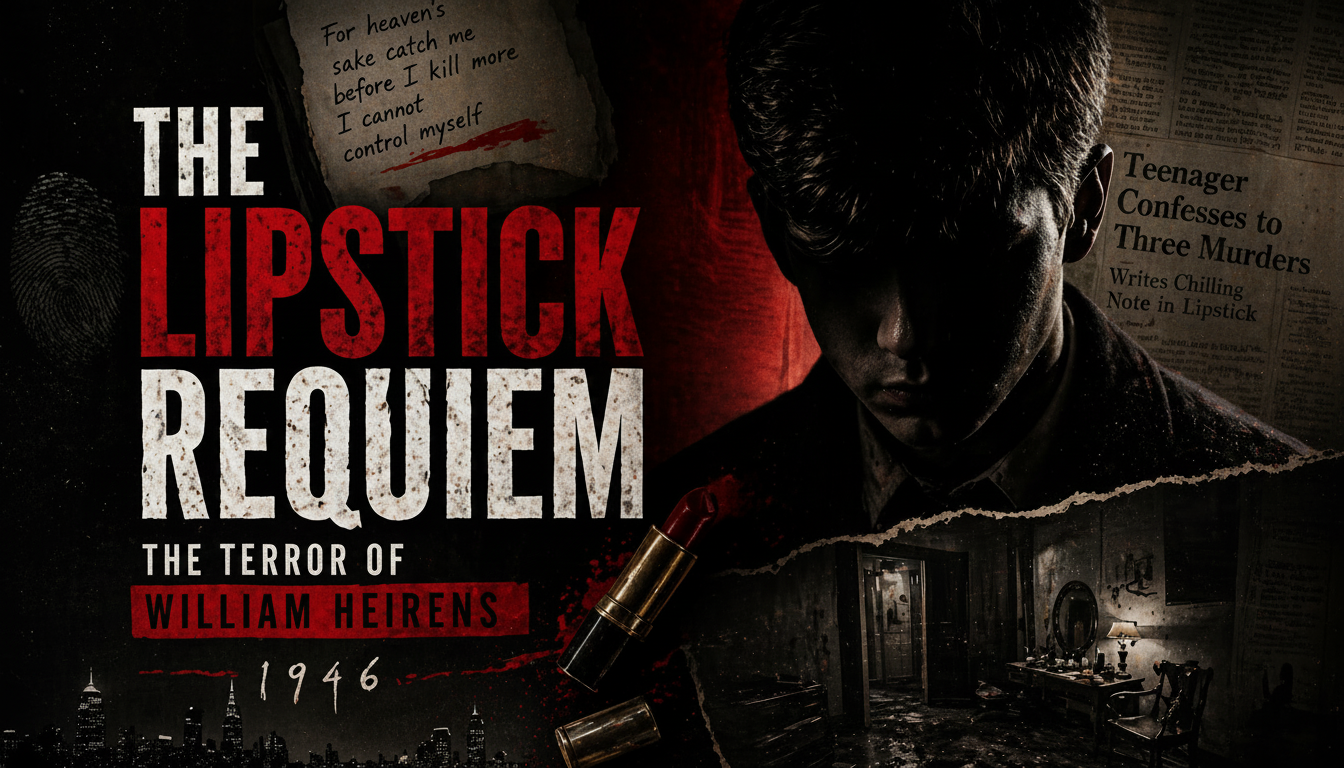
1. The Crimson Cry: “Catch Me Before I Kill More”
In 1946, the city of Chicago was paralyzed by a unique brand of urban terror. It wasn’t just the clinical brutality of the murders that haunted the public; it was the macabre, theatrical pleas left behind at the crime scenes.
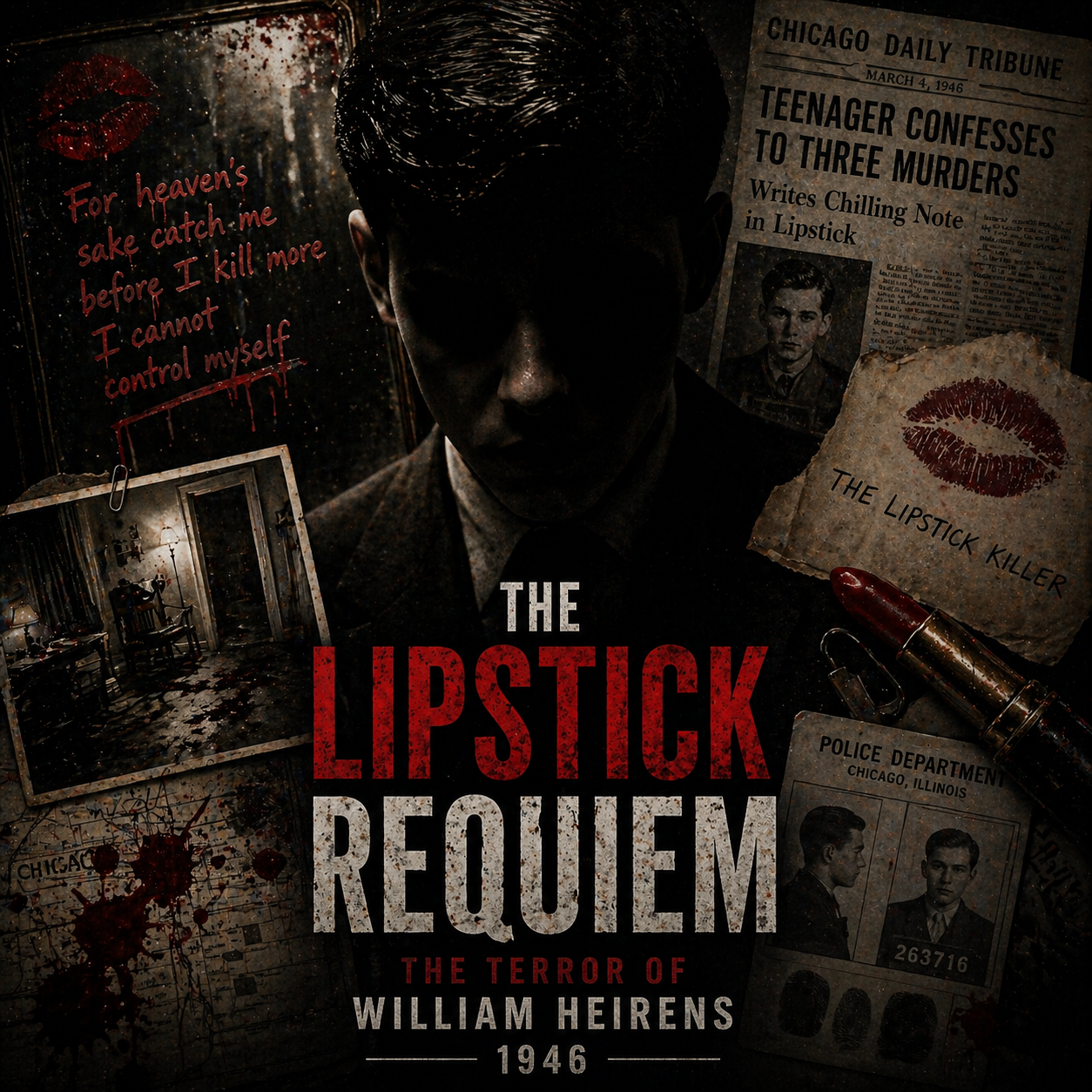
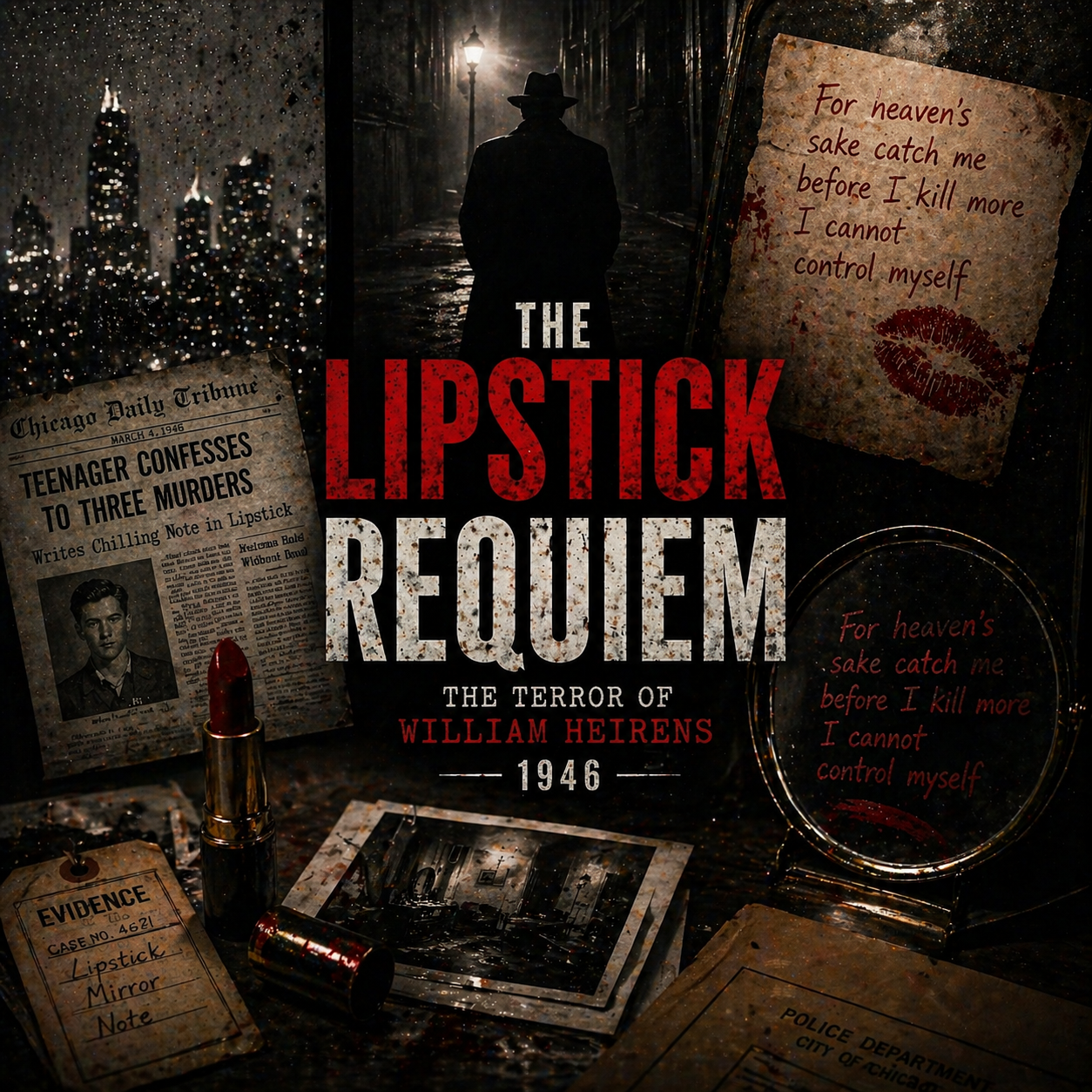
The Signature: After the murder of Frances Brown, investigators discovered a chilling message scrawled in the victim’s own red lipstick on her bedroom wall: “For heavens sake catch me before I kill more I cannot control myself.”
The Methodology: The predator, dubbed the “Sky-Climber,” targeted women within the perceived safety of high-rise apartments, gaining entry via fire escapes with terrifying agility.
2. Forensic Milestone: The Dawn of Behavioral Profiling
The “Lipstick Killer” case is a cornerstone of forensic history because it forced local law enforcement to move beyond basic beat policing into the realm of psychological profiling and advanced forensics.
- Handwriting Analysis: In one of the era’s most ambitious forensic efforts, police compared the lipstick message against thousands of writing samples. This was a pioneering moment for graphology in solving urban serial murders.
- The Latent Print: Despite the killer’s habit of wearing gloves, a single partial fingerprint was recovered from the ransom note of 6-year-old victim Suzanne Degnan. This microscopic piece of evidence eventually led police to a university student named William Heirens.
3. The Ethical Void: A Confession Under “Truth Serum”
While Heirens was convicted, the case remains one of the most debated “closed” files in American history due to the interrogation tactics used.
Sodium Pentothal: Police administered “truth serum” to Heirens, a method now considered unreliable and unethical. Under its influence, Heirens spoke of a dual personality named “George” who carried out the killings.
A Lifetime of Silence: Heirens spent over 65 years in prison becoming the longest-serving inmate in Illinois history while maintaining that his confession was coerced through police brutality and media sensationalism.

Stef Irish’s Forensic Deep Dive
- The Dual Personality Archetype: As a researcher, I find the internal struggle written on those walls fascinating. Whether it was a genuine psychological break or a calculated attempt to set up an insanity defense, the lipstick message remains one of the most haunting pieces of evidence in the 20th century.
- Urban Vulnerability: Unlike the “Express Killer” who utilized vast distances, the Lipstick Killer weaponized the density of Chicago. He proved that even behind locked doors on the 5th floor, the “Sky-Climber” could find a way in. My mapping of the fire escape entries reveals a suspect with intimate knowledge of Chicago’s architectural layout.
- Exclusive Archives: I have obtained high-resolution scans of the original 1946 crime scene sketches. I will be posting these, along with my breakdown of the handwriting discrepancies, on my Facebook and Twitter (X) pages tonight.

Researcher’s Note
This report was independently researched and written by Stef Irish, founder of True US Crime.
This article is the result of several months of in-depth research, combining historical records, verified timelines, and documented sources to ensure accuracy and clarity.
Particular attention has been given to investigative details, behavioral analysis, and the broader context surrounding the events, with the goal of delivering a clear, structured, and reliable account.
All content is developed with a commitment to factual integrity, professional storytelling, and respect for the individuals and cases explored.
This note applies to all investigative reports published on True US Crime, reflecting a consistent standard of research and editorial quality.


