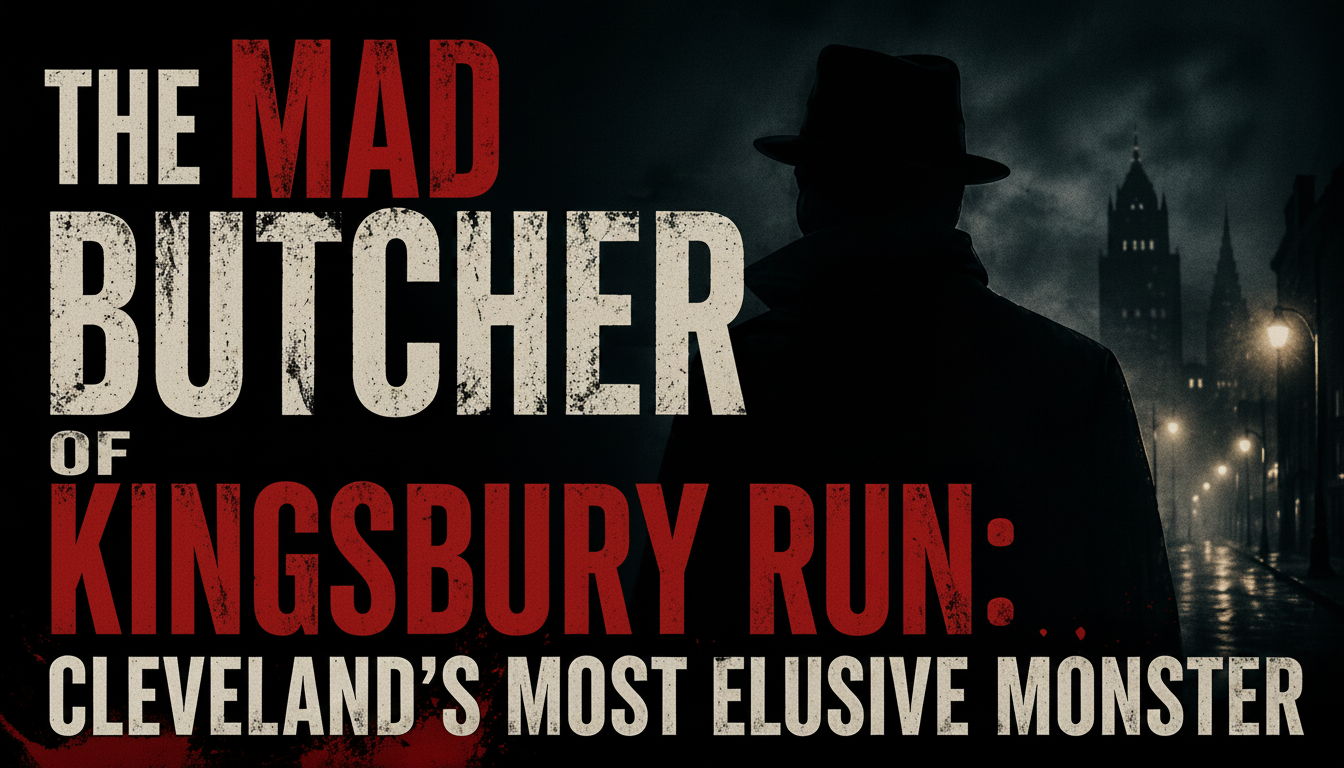
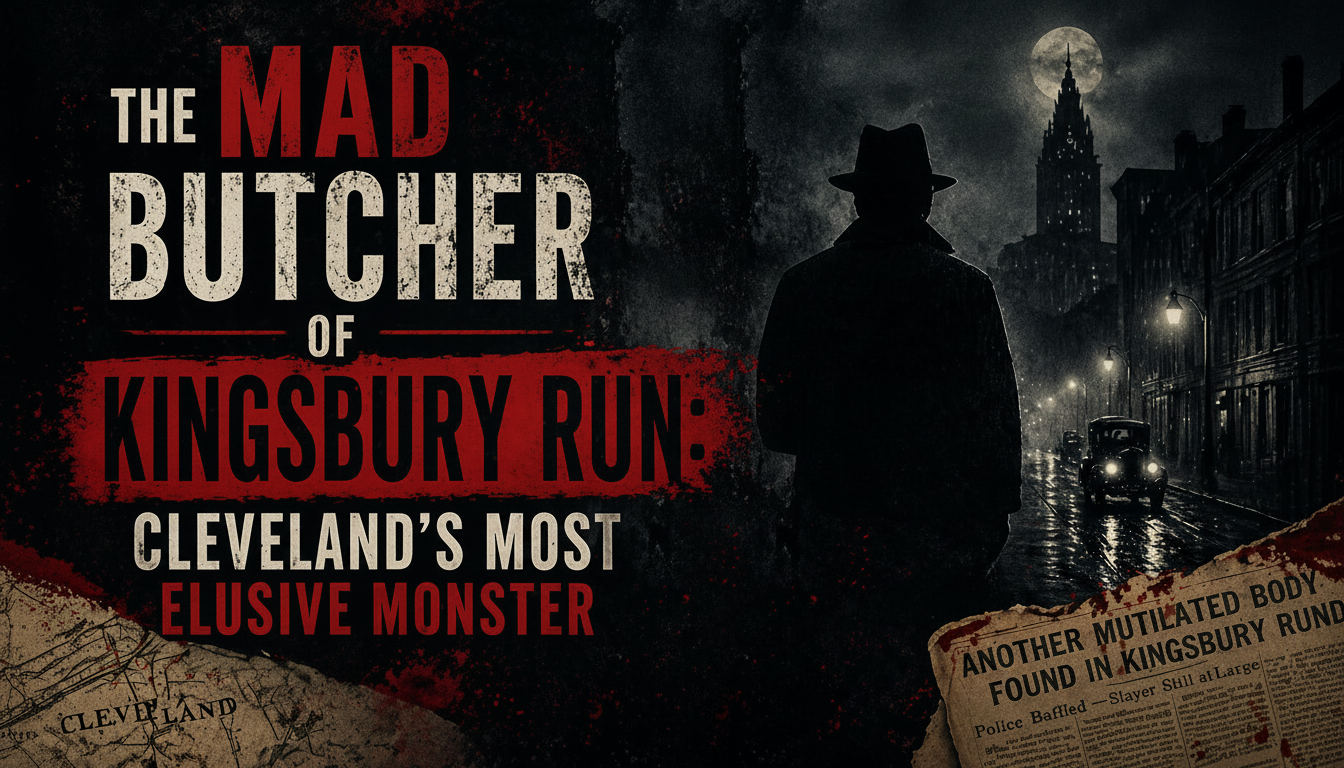
In the mid-1930s, while America was struggling through the Great Depression, the city of Cleveland, Ohio, was haunted by a killer so clinical and so brutal that he baffled the legendary Eliot Ness the man who brought down Al Capone. This killer is known to history as the “Cleveland Torso Murderer” or the “Mad Butcher of Kingsbury Run.”
A Surgical Nightmare
The Butcher’s method was distinctive and horrifying. He didn’t just kill; he disassembled.
The Signature: He frequently left the torsos in plain sight in public parks or near Lake Erie as if to taunt the authorities.
The Victims: Most were “drifters” or members of the “working poor” living in the shantytowns (Hoovervilles) of Kingsbury Run. Because many were never identified, he is often called the “Killer of the Unknowns.”
Decapitation and Dismemberment: The killer would often decapitate his victims while they were still alive. His cuts were so precise that investigators were certain he had professional surgical or butchery training.
Why the Case Remained Cold
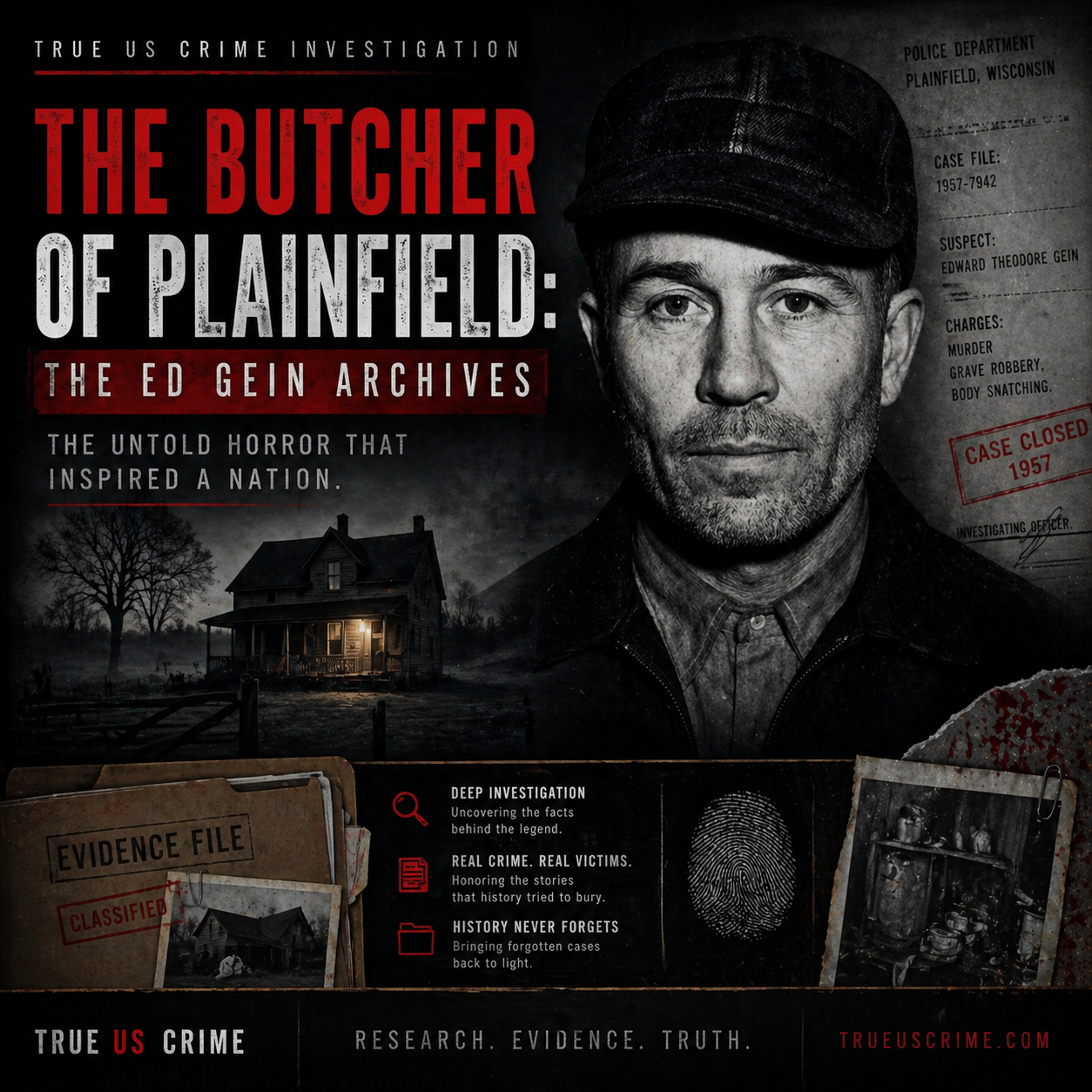
The killings officially stopped in 1938, but the Butcher was never brought to justice.
- Lack of Evidence: Because the victims were often transients, the police had no “crime scene” other than where the bodies were dumped.
- The Mind Games: The killer allegedly sent taunting postcards to the police, mocking their inability to find him.
Archive File: Case Summary
Status: Unsolved
Active Years: 1934 – 1938
Location: Cleveland, Ohio (Kingsbury Run district)
Confirmed Victims: 12 (though some estimate up to 20)
Lead Investigator: Eliot Ness
🔍 Deep Dive Investigation: The Mad Butcher of Kingsbury Run
1. Forensic Analysis: Surgical Mastery
What sets this case apart in American criminal history is the killer’s terrifying level of skill. Autopsy reports from the 1930s reveal chilling details:
Chemical Treatment: Some of the victims’ skin appeared to have been treated with chemicals to alter its texture or color, a deliberate move to further complicate identification and forensic dating.
Anatomical Precision: The victims were not merely “hacked.” The killer knew exactly how to sever the cervical vertebrae without splintering the bone a technique typically mastered only in medical school or high-end industrial butchery.
Professional Evisceration: In several cases, internal organs were removed with such care that investigators believed the killer operated in a private, equipped space (like a laboratory or a specialized basement) before disposing of the remains in public.

2. The Victims: “The Faceless Dead”
Out of the 12 official victims, only two were ever formally identified. This highlights the killer’s strategy of targeting “invisible” members of society:
- Edward Andrassy (Victim No. 1): Identified via fingerprints. He was known to frequent the rough bars of Kingsbury Run. His death was the catalyst for the city-wide manhunt.
- Florence Polillo (Victim No. 3): Her remains were found dismembered in trash bags behind a dry cleaner. Her identification proved the killer targeted both men and women across the working class.
3. The Psychological Duel: Eliot Ness vs. Dr. Sweeney
The primary suspect, Dr. Francis E. Sweeney, sits at the center of a political and personal drama:
- The Polygraph Test: Eliot Ness administered a lie detector test (cutting-edge tech at the time) to Sweeney. The doctor failed miserably. Legend has it Ness shouted, “I’ve got him! It’s him!”
- Political Immunity: Sweeney was the first cousin of Congressman Martin L. Sweeney, a fierce political rival of Eliot Ness. Ness knew that an arrest without irrefutable physical evidence would be political suicide for himself and the mayor.
- The Post-Crime Mind Games: After Sweeney voluntarily committed himself to a psychiatric hospital, he spent years mailing harassing postcards to Eliot Ness, mocking the legendary lawman for his failure to secure a conviction.
4. The Burning of the Hoovervilles (August 1938)
In a desperate and controversial move to end the terror, Eliot Ness ordered a massive raid on the Kingsbury Run shantytowns.
- His men evicted thousands of homeless residents and burned the entire settlement to the ground to eliminate the killer’s hiding spots.
- This act was a PR disaster for Ness. The public saw it as an attack on the poor rather than a solution to the murders. While the killings stopped shortly after, the “Butcher” was never caught.
5. The “Black Dahlia” Connection
Modern cold case investigators often draw parallels between the Cleveland Butcher and the 1947 Black Dahlia (Elizabeth Short) murder in Los Angeles. The surgical bisecting of the body and the posing of the remains suggest a signature strikingly similar to the Mad Butcher’s methods.
Researcher’s Note
This report was independently researched and written by Stef Irish, founder of True US Crime.
This article is the result of several months of in-depth research, combining historical records, verified timelines, and documented sources to ensure accuracy and clarity.
Particular attention has been given to investigative details, behavioral analysis, and the broader context surrounding the events, with the goal of delivering a clear, structured, and reliable account.
All content is developed with a commitment to factual integrity, professional storytelling, and respect for the individuals and cases explored.
This note applies to all investigative reports published on True US Crime, reflecting a consistent standard of research and editorial quality.